Build the plan around the correct entrance
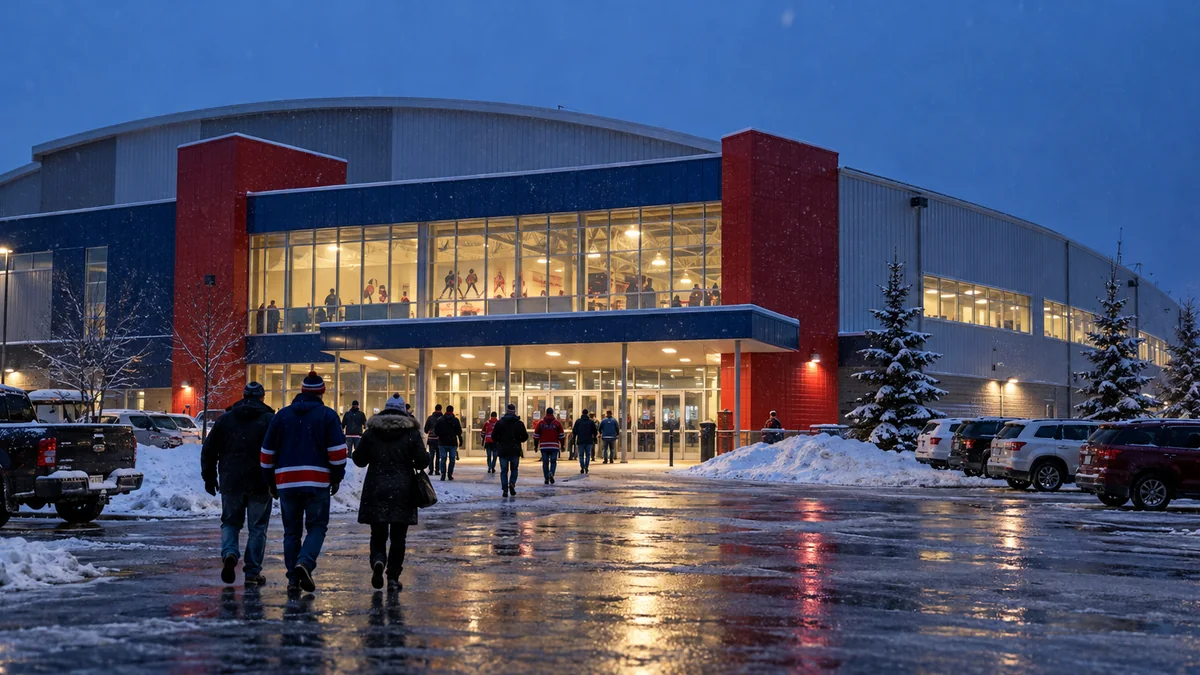
An arena’s street address may take a navigation app to the front of the building rather than the entrance to your selected lot. Find the venue’s parking map or written directions and compare them with the road approach. A short distance on a map can still involve a one-way system or a different access road.
The official directions and parking page for Save-On-Foods Memorial Centre is an example of the kind of source to use. It is a starting point for that venue, not a reusable map for another building. If the event publishes a separate traffic notice, read it alongside the general directions. The event-specific notice may describe a different arrangement.
Compare official and nearby options fairly
Official arena parking can be convenient, but proximity is only one part of the decision. A nearby public garage or private lot may have a different walking route, payment system or exit pattern. Check whether the operator permits event parking and whether your planned departure falls within the advertised opening hours.
For each option, record the complete cost, the address of the vehicle entrance and any reservation conditions. Do not count an unverified map listing as a confirmed space. A claimed walking time also needs context: crossings, weather and the pace of your group can matter more than the distance shown by a route planner.
Read the payment and reservation conditions
A parking pass and an admission ticket are separate products unless the seller states otherwise. Check what the pass actually covers: a specific lot, a permitted time window or a guaranteed reservation. Save the confirmation in the format the operator supports. A receipt alone may not be the code required at an entry barrier.
Avoid making your plan depend on a payment method that has not been confirmed. The same applies to refunds, re-entry and overnight parking. These conditions belong to the operator, and they can differ between sites. This guide deliberately does not quote a generic hockey parking price because such a number would hide the choices you need to check.
Accessible parking needs a route check
Look beyond the symbol on a map. Confirm eligibility requirements, the route from the space to the correct entrance and whether an attendant or advance arrangement is involved. Accessible seating and accessible parking are related parts of a visit, but arranging one should not be assumed to arrange the other.
SaskTel Centre and Save-On-Foods Memorial Centre each publish official accessibility information. Their pages illustrate why the actual venue is the right authority. If distance, surface conditions or a passenger drop-off affects your group, ask a specific question before travelling. A nearby space does not solve a route that has an unsuitable kerb, staircase or long outdoor section.
Set arrival time by working backward
Choose the part of the evening you want to reach, then add the steps before it. Those may include parking access, payment, walking, admission screening and finding your seats. Check door time separately from game time. An early arrival only helps if the facility and parking option are open when you expect.
Use a flexible buffer instead of copying a universal recommendation. A first visit, winter weather or a family group can justify more time. Check traffic information close to departure. If the main approach becomes congested, follow published venue directions and lawful road access rather than improvising through restricted service areas.
Make transit a complete return journey
Transit can remove the parking task, but only if it works for both directions. Find the stop closest to the suitable arena entrance and check the evening service for the actual day of travel. Do not assume a route’s daytime frequency continues after the game. Plan for possible overtime without treating the final horn as a fixed appointment.
If a venue advertises an event shuttle, confirm the pickup point, operating dates and any fare or eligibility conditions. Do not assume an old shuttle announcement still applies. A backup route, such as a different service or a pre-arranged driver, is useful when the last departure leaves little flexibility.
Use research sites as a starting layer
A secondary parking guide can help organize questions and identify topics to check. VenueGuideHQ publishes parking resources covering venues and attractions. Use it as a research starting point, then verify the selected arena’s current lot rules, accessibility arrangements and event notices with the official operator.
This is a publisher-selected external resource, not an official hockey partner. A guide should help you reach a decision, not replace the terms attached to your parking booking. If two sources disagree, prioritize the venue’s current event instructions and ask the operator to resolve the point before paying.
A worked parking comparison
Imagine one lot beside the arena and another farther away with a simpler exit route. Compare the full cost, permitted hours, walking conditions and the needs of your passengers. The closer space may be useful for someone who cannot walk far. The other option may suit a visitor who wants to combine the game with a meal nearby. Neither is a universal winner.
Now add a late finish. If one option closes at a fixed hour, that condition may matter more than the price difference. If an accessible route is required, verify it before considering convenience. This kind of comparison produces a decision you can explain and check. It is more dependable than choosing a lot solely because an old review calls it the best place to park.
A practical fallback and exit checklist
Before leaving, select a second lawful parking option and note its entry address. Check whether it will still be available at your expected arrival time. Avoid letting a passenger search for alternatives while the driver makes sudden decisions in a busy queue. If the first option fails, use the prepared fallback and reassess calmly.
For departure, remember the lot or level, return by the safe pedestrian route and have any required exit validation ready. Continue with our bag rules guide so the walk to the gate does not end in a return trip, or use the arena visit guide to plan the rest of the evening.
Sources and reading notes
Historical details are checked against the records below. Fan advice is general planning guidance; the current venue, event organizer or carrier sets its own rules.
- Save-On-Foods Memorial Centre official directions and parking
- Save-On-Foods Memorial Centre official accessibility information
- SaskTel Centre official accessibility information
- SaskTel Centre official facility maps
Research checked October 18, 2026. Dates in archive articles describe their original events, not upcoming games.